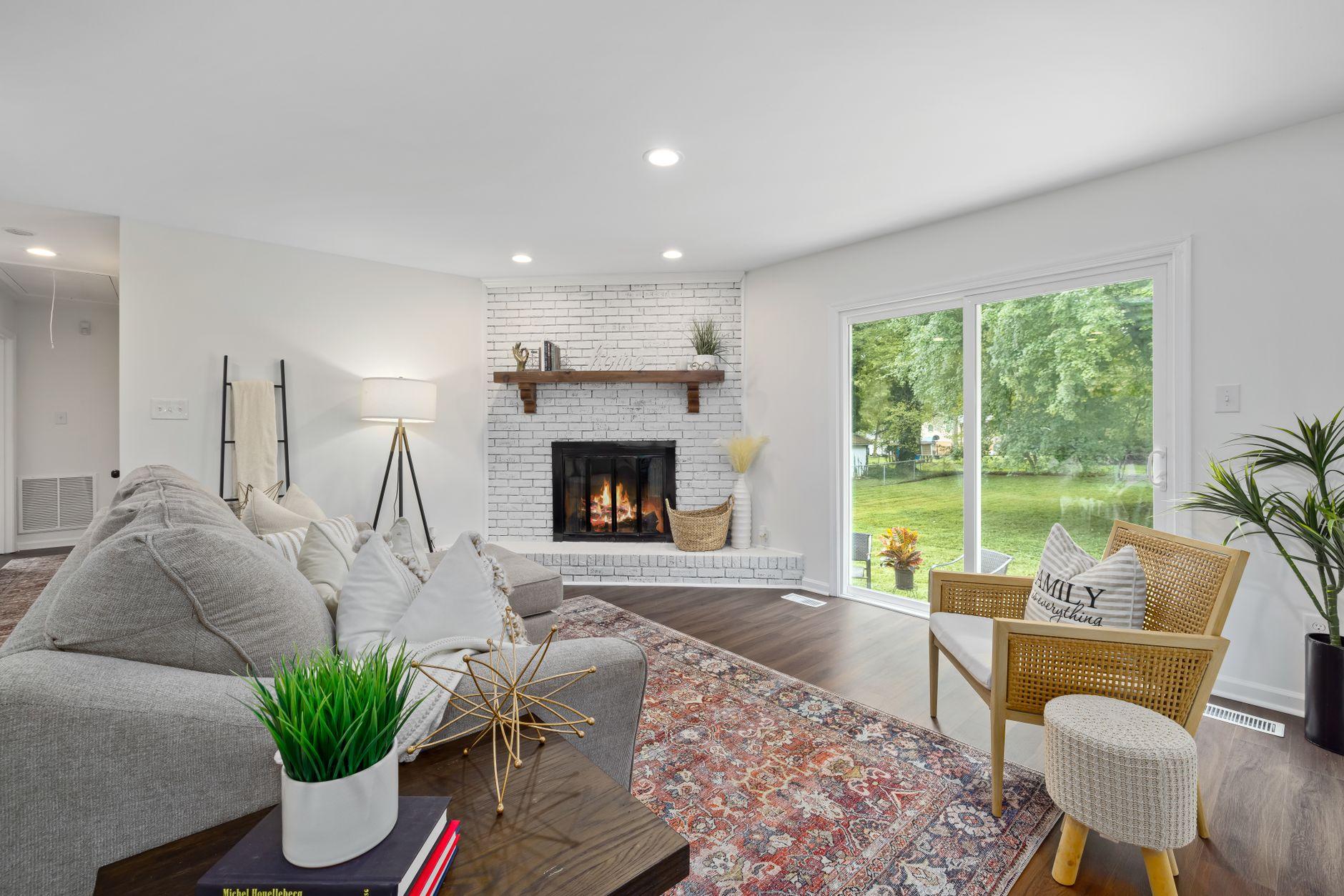

Logs are the part people shop for. The burner under them decides whether the set looks right, lights every time and stays clean. A log package is also the least costly way to put a gas flame into a brick fireplace, which makes it the easiest to buy badly. This guide covers what you are really choosing when we fit a set in a Seal Beach living room, and why two sets that match in a showroom can behave very differently in your own firebox.
What comes in the box
- Burner. Either a steel pan or one or more pipes drilled with ports. A pan gives a fuller, more even bed of flame; a pipe burner is simpler and cheaper.
- Grate. Holds each log in the spot the maker tested it in. Logs out of place are the main cause of soot.
- Logs. Cast ceramic fiber or refractory concrete, painted to look like oak or birch. Fiber logs heat and glow quickly; concrete logs are heavier and stand up to handling.
- Ember material. Glowing wool or granules spread over the burner. The wrong amount changes the flame and can start soot.
- Valve and ignition. A match-lit valve opened with a key, a pilot lit by a knob, or electronic ignition run from a remote or wall switch.
Why every set we fit is vented
A vented set is made to burn with the damper open. The flame is tall and yellow, it moves like a wood fire, and the exhaust goes up the flue. That means the chimney has to draw, and the damper gets a clamp so nobody can close it fully while gas is flowing.
Some sellers market sets built to burn with no flue at all. State rules on unvented gas appliances in homes are strict, and those sets also dump moisture and combustion gases into the room. We do not fit them. If you have one already, we can look at it and talk through a vented replacement.
Match light, pilot or remote
- Match light. The simplest valve: turn the key, light the burner by hand. Cheap and long-lived, but there is no flame sensor, so it relies on the person lighting it.
- Pilot with a knob. A small flame stays lit and a sensor shuts the gas if it goes out. Safer and easier for most households.
- Electronic with remote. Lights from the couch or a wall switch and suits anyone who finds kneeling at the hearth hard. More parts, and a little more to service.
What decides the price of a set
We do not publish one number for log sets, because the package changes so much from house to house. The figure follows:
- the width and depth of the firebox, which set the burner and log size
- pan or pipe burner, single or double
- the ignition type from the list above
- log material and how many pieces
- whether gas already reaches the hearth, and whether the old line or key valve needs replacing
- anything the chimney needs first, such as a damper that will not open fully or a missing cap letting rain onto the burner
From that list the next move is simple. Tell us the width of your fireplace opening, whether there is a gas key beside the hearth today, and whether you want a remote, and we bring sample logs and burners to the visit. You get the written price for the set you choose before we order it.
Why the chimney matters to a log set
A vented set exhausts through the old masonry flue, so that flue has to be open and drawing. Before fitting, we look at the damper, the smoke chamber, the flue and the cap. A flue lined with years of creosote from wood fires should be swept first; our chimney sweep is from $430. A cracked tile deep in the flue shows up on a Level 2 inspection at $400 and is better dealt with before new gas goes in.
Fitting day
On the day, we level the burner in the firebox, connect it to the supply, and test every joint for leaks with a detector before any flame. Logs go onto the grate exactly as the diagram shows. Then we light the set, check the flame at low and high, and confirm the smoke and heat are going up rather than rolling into the room. Before we leave, the people who will use it are shown how to light it and how to shut it off at the valve.
Salt air and logs
A few blocks from the beach, an uncapped flue lets salty drizzle fall straight onto a steel burner pan. Pans rust, ports clog and the flame turns ragged. A stainless cap on top protects a new set from rain and nests; our cap installation is quoted after we measure, and the price depends on size and type.
Keeping the set looking right
Over time, logs get nudged by a broom or a curious pet, ember wool thins out and the flame starts to leave black tips. A yearly service resets the logs to the diagram, cleans the burner ports, replaces ember material and checks the valve. Our fireplace gas logs page lists what that covers. Owners from Huntington Beach to Cypress usually book it in early autumn.
Picking a set for a Seal Beach fireplace? The contact page is the place to start; tell us the room and how often you plan to light it, and we take it from there.
Prefer a Technician Look at It?
Mathis Chimney Sweep tests the pilot, valve, igniter and vent on your unit, names the part at fault and prices the fix on paper first. Book from Seal Beach, Cypress, Garden Grove, Huntington Beach or a town nearby.