
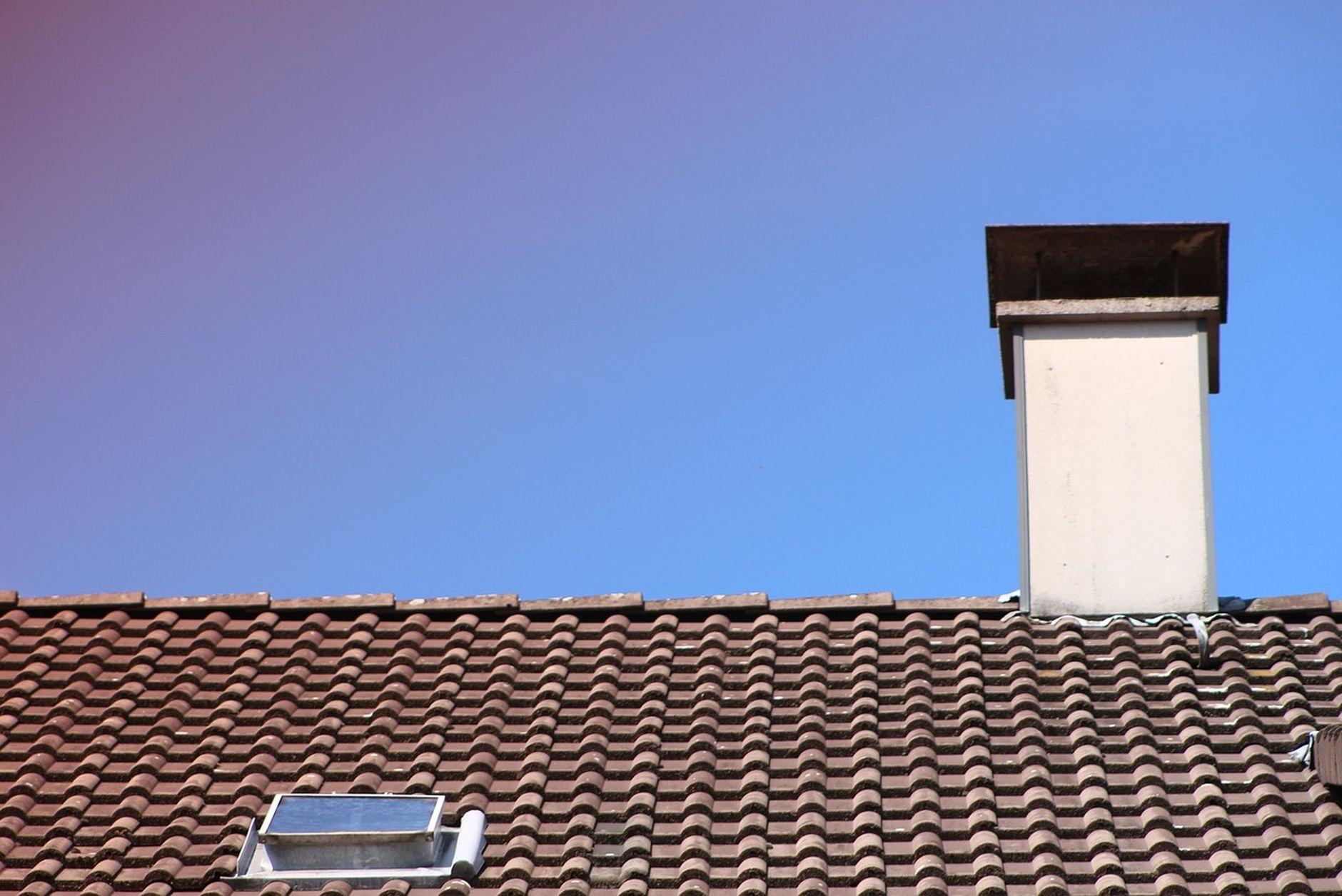
Walk a few streets back from the sand in Seal Beach and look up. Plenty of the chimneys are not brick at all. They are boxes framed in wood and finished to match the house, with a metal sheet across the top and a short pipe and cap sticking out of it. That sheet is called a chase cover. Near the ocean it has a hard life, and when it goes, water finds its way to a gas fireplace that was never built to get wet.
Why the coast is hard on these lids
Most original chase covers were galvanized steel: ordinary steel with a thin zinc coat. Salt air strips that coat faster than inland weather does. Once the zinc is gone, the steel rusts, the sheet sags, and the low spot holds water. Every rain then sits on the lid instead of running off, and every pinhole of rust becomes a drain.
The lid also has an opening where the vent pipe passes through, sealed with a collar. That seal dries and cracks in the sun. Between a rusted sheet and a split collar, water has two ways in.
What the damage looks like from inside
Water that gets past the lid runs down the inside of the framed box. On a gas fireplace it lands on things you would not want wet:
- the top of the firebox, where rust streaks start to show at the edge of the surround
- the gas valve and control board under the burner, which corrode and start failing for no clear reason
- the insulation and framing inside the box, which stay damp and begin to smell musty
- the drywall beside the fireplace, where a brown mark spreads after storms
Owners often call us about a pilot that keeps dropping out. We find the valve corroded and trace the rust up to the lid. That is why we look at a chase top whenever a gas unit has unexplained valve or board trouble.
What can be seen from the yard
You can learn a fair amount without climbing anything. From the street or the yard, look for orange streaks running down the siding below the lid, a lid that looks dished in the middle, or a cap above it that has gone brown. Note any stains inside near the fireplace and whether they follow rain. That is enough for us to decide what the visit needs.
What the repair involves
The answer depends on how far the water has travelled.
- Lid only. If the framing below is dry, the old lid comes off and a new stainless one is made to the measured size of your chase, with a raised center so water runs off, and a new storm collar around the pipe.
- Water inside the chase. If the framing or insulation is wet or rotted, the leak is past the lid. That moves into leak repair, which runs $575 to $3,450, and covers drying, replacing damaged material and sealing every entry point.
- Damaged gas parts. A corroded valve or board is priced as a gas fireplace repair once we see it.
- Lid and cap. If the vent cap has corroded too, we replace it at the same time. Our cap installation is quoted after we measure the flue.
What sets the price
A chase lid has no single published price because chases differ so much. The figure follows the size of the chase top, how many pipes go through it, whether stainless or another metal is chosen, how easy the roof is to work on, and whether water has already reached the inside. Wet framing turns a sheet-metal job into a leak repair.
So the next thing to do is simple. Tell us where you see rust or staining, whether the fireplace is gas, and whether the marks show up after rain, and we arrange a roof visit that covers the lid, the cap and the chase. You get the written figure after that visit, before any metal is cut.
Why stainless is worth it here
Near the water, we fit stainless lids and stainless caps. They cost more than galvanized ones and they last far longer in salt air. A galvanized replacement within sight of the ocean often starts rusting in a few winters, and then the whole cycle begins again.
The same thinking applies to the fasteners. A stainless lid held down with plain steel screws will bleed rust stains from every screw head, and the holes slowly widen until the lid lifts in a strong wind. We use stainless screws and seal each one, so the lid and what holds it age at the same pace.
Related work on the same roof
While we are up there, we look at the flashing where the chase meets the roof, the siding seams on the chase walls and the vent pipe itself. If the house also has a brick chimney, its crown and cap get the same look. Our chimney chase cover page covers the lid work, and chimney leak repair covers water that has already got in. For a home being sold, our up to code repairs page shows how these items sit in a report.
Inland homes too
Lids rust slower in Cypress and Garden Grove than they do along the beach, but age catches up. Homes in Huntington Beach close to the water see the same pace of corrosion as Seal Beach.
Rust on the chase top or a gas valve acting up after storms? Head to the contact page, tell us what you see from the ground, and we book the roof visit.
Prefer a Technician Look at It?
Mathis Chimney Sweep tests the pilot, valve, igniter and vent on your unit, names the part at fault and prices the fix on paper first. Book from Seal Beach, Cypress, Garden Grove, Huntington Beach or a town nearby.